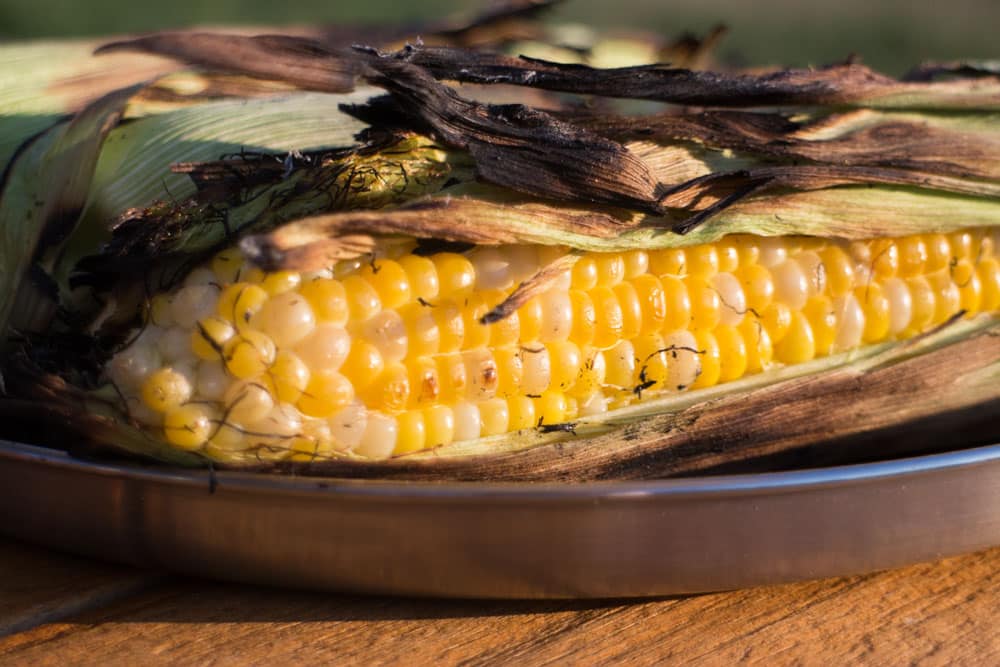
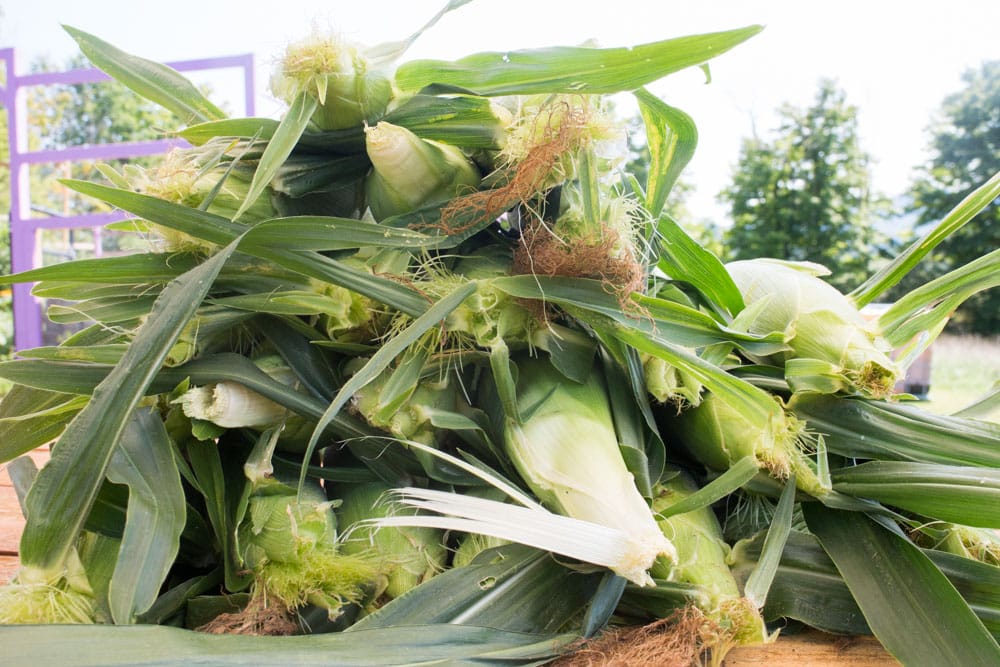
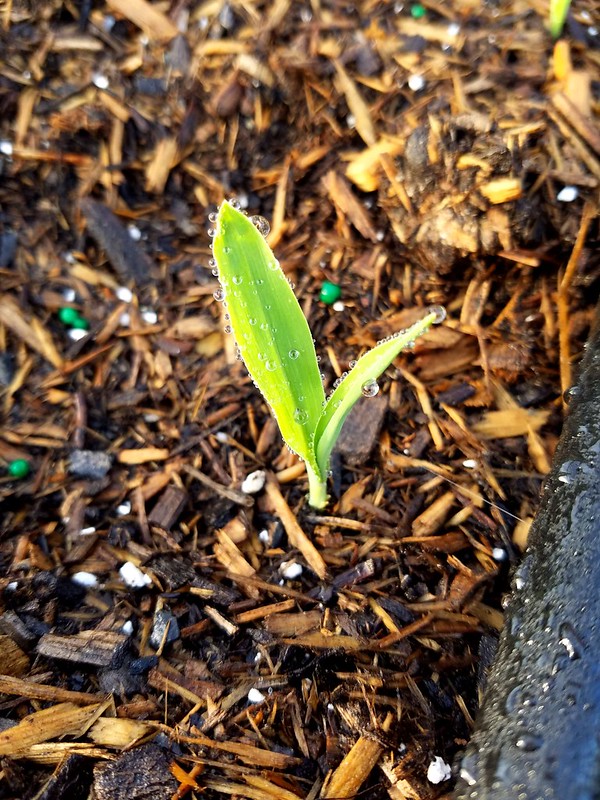
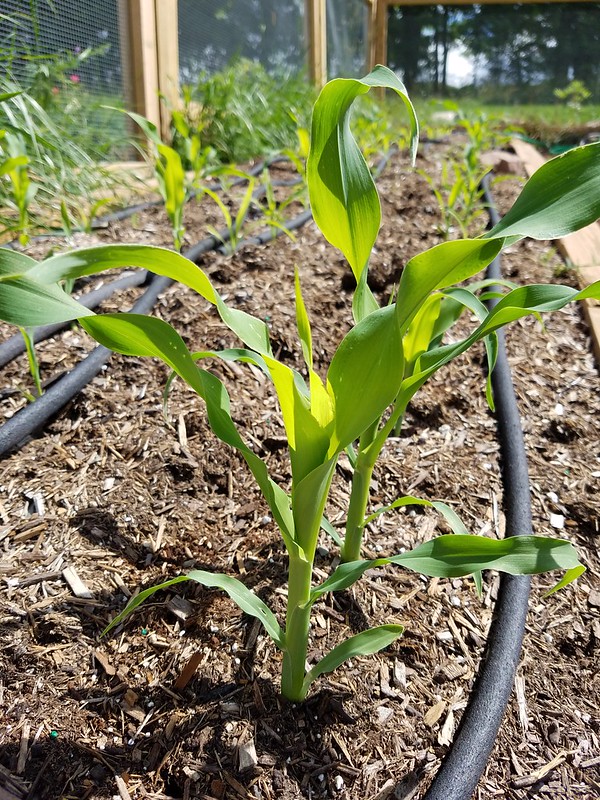
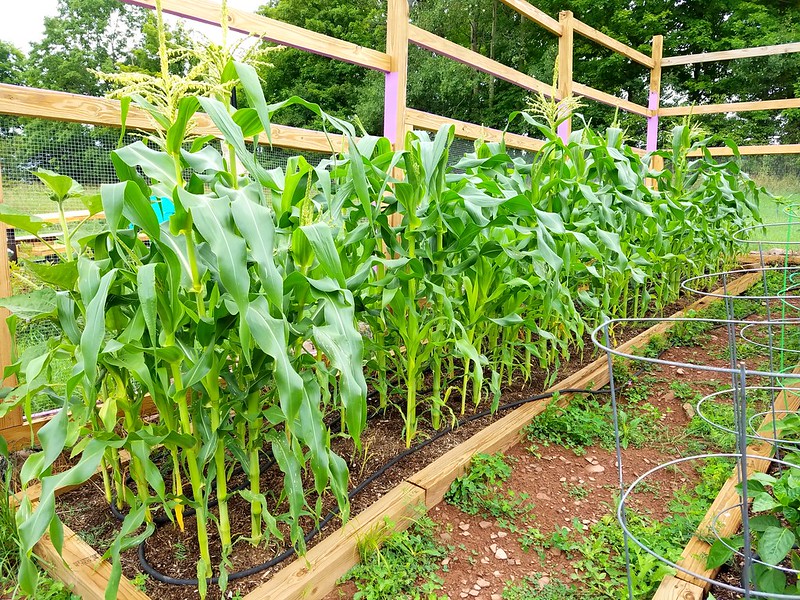
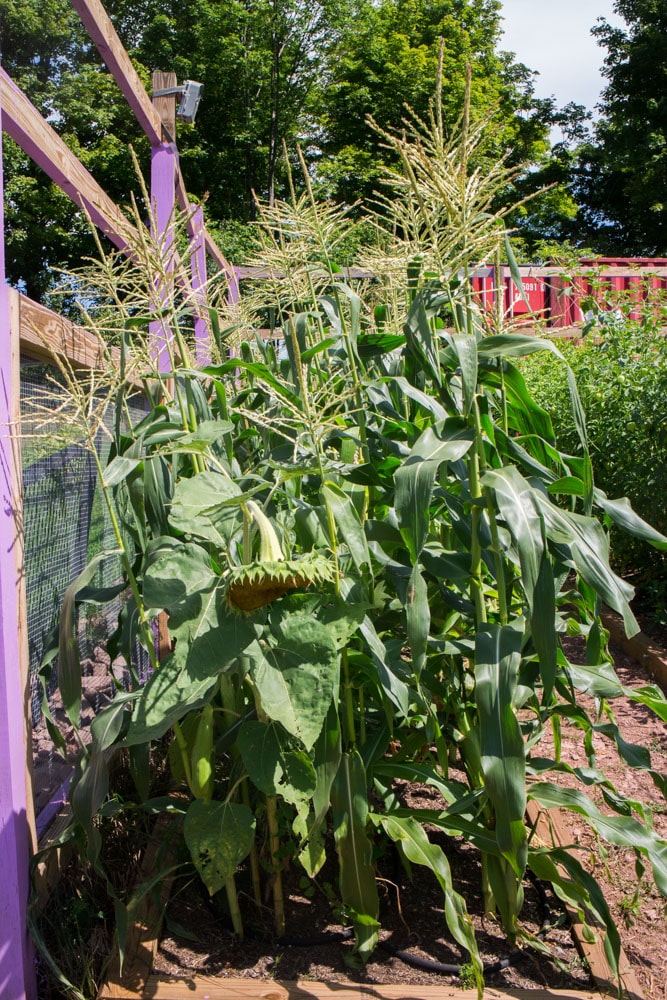
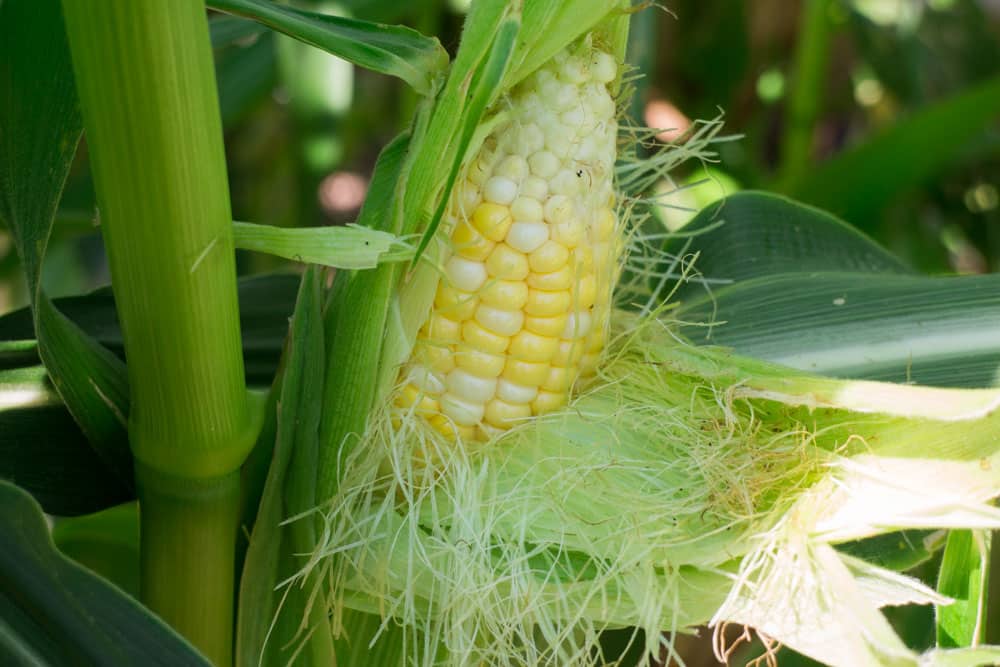
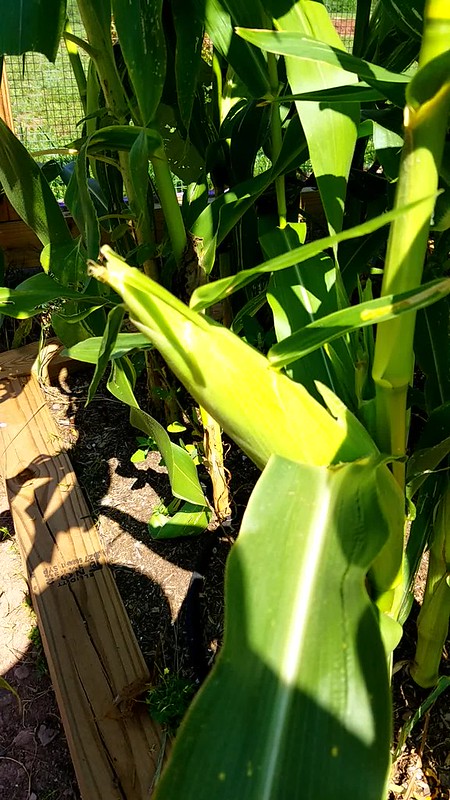
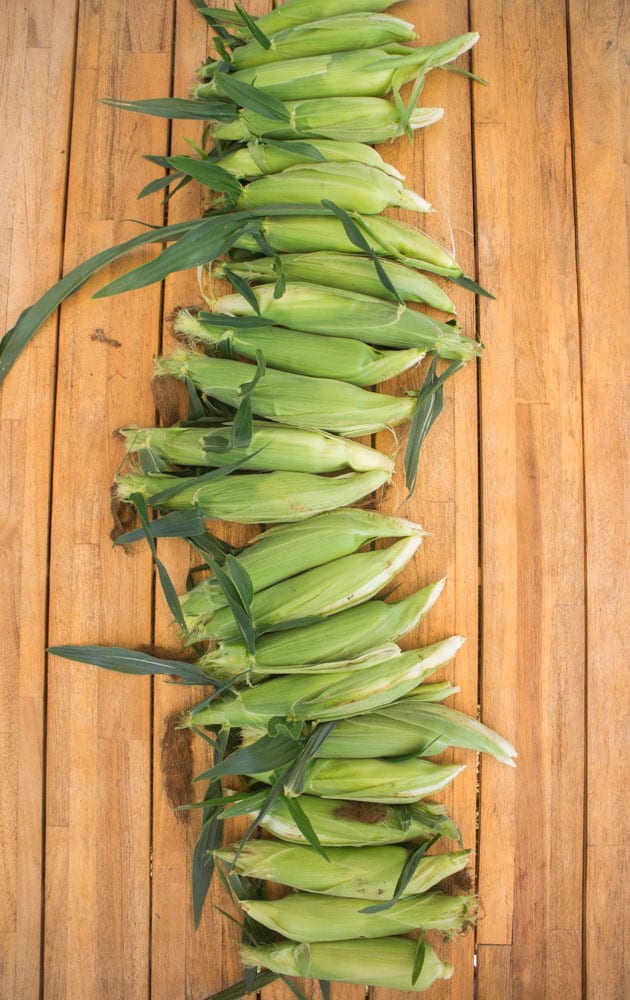
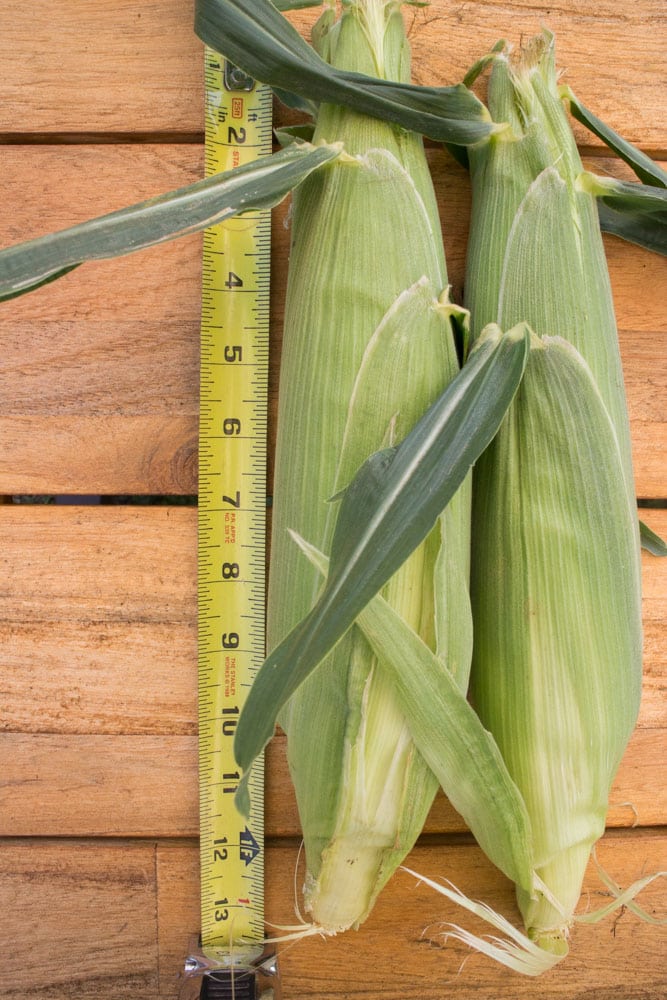
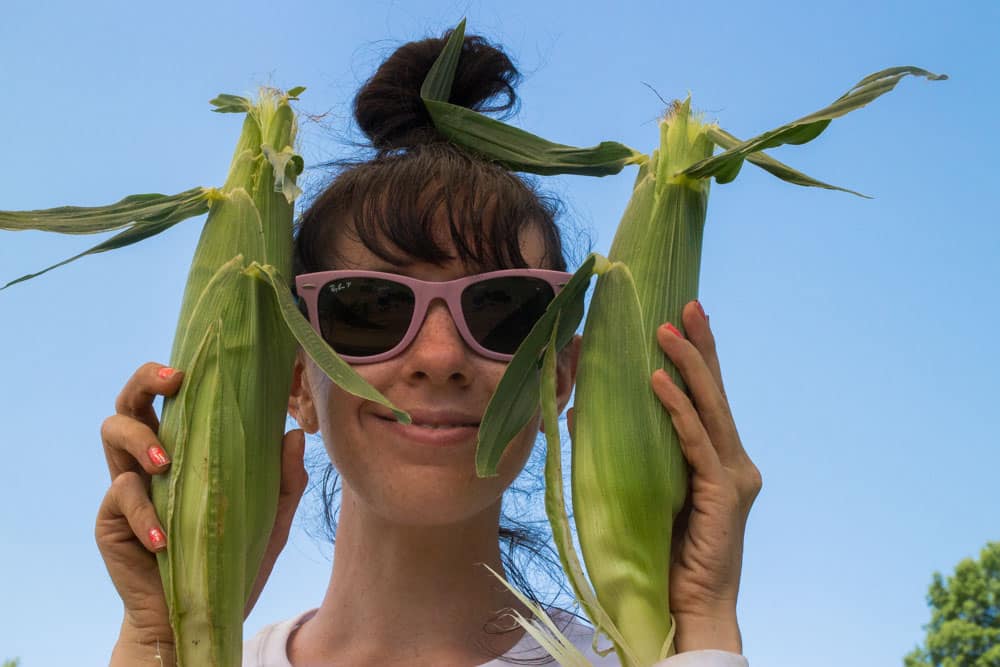
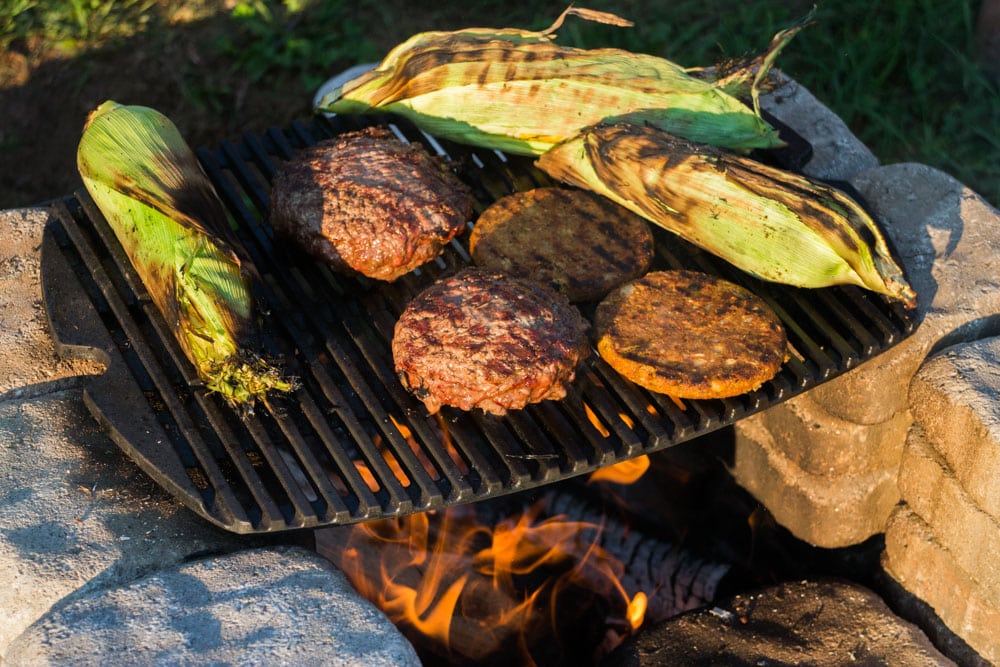
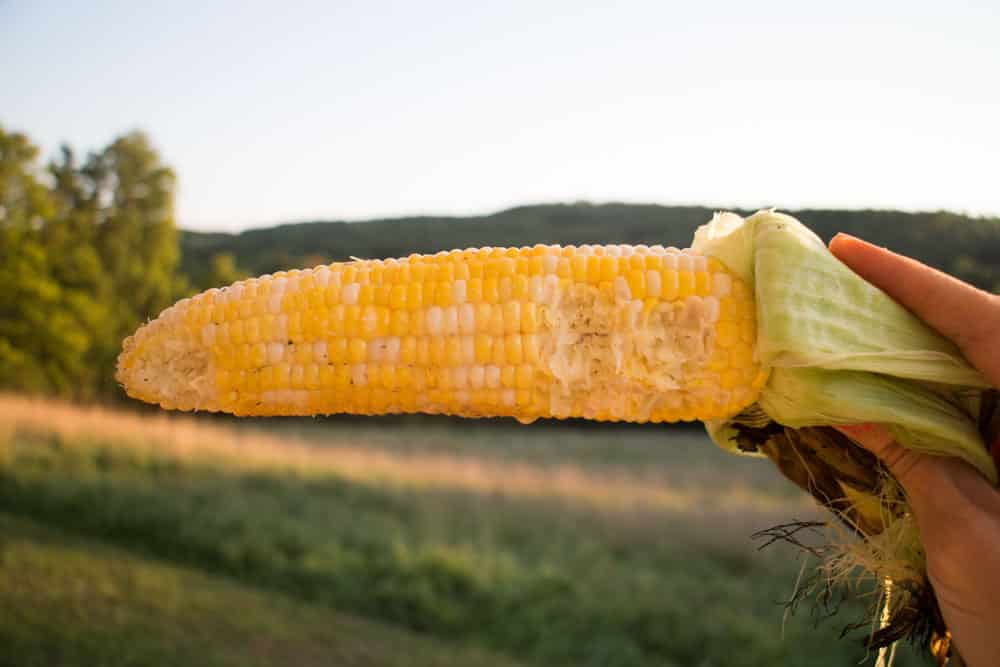
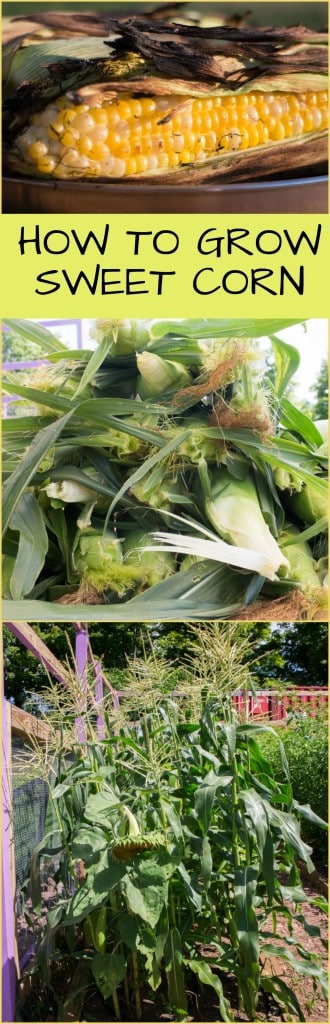
We tried growing corn up on the roof for a few years and it grew.. sometimes. In 2012 we had the best results on the roof, but each year before and after was hit or miss (here’s how to protect corn from rats). Each year I talked Matthew into trying again, and each year we got small, if any, corn. Eventually Matthew had to give me a intervention and say that corn was a waste on the roof, why don’t we grow something else? After huffing and puffing and blowing the house down, I gave in, no more growing corn on the roof. So this year, with our first proper growing in the ground, non-rooftop garden, I was determined to grow corn! Lots of it! A entire bed of it! We are still figuring out our growing schedule, but we decided to plant it in early June. By July it was growing, but not that tall, and I was becoming nervous because the (legit) farmers around us had corn that was 5 feet tall. I was worried we started too late. I was worried the ground wasn’t ideal growing conditions for our corn. Then August came and the corn just took off! It grew tall! It grew ears! It grew multiple ears on each stalk! The corn couldn’t control itself, it kept growing and growing and growing! Last, last weekend, we peeked at the corn and it was white, not the yellow/white combo it was supposed to be, so we gave it one more week. This past weekend, it was ready. We picked it. We ate it. I danced with it. Technicals: We grow Xtra-Tender bicolor super sweet corn. I’m in Zone 5A. Corn seeds were planted directly in the soil June 6. We harvested on September 3. Seed packets say 73 days to maturity but ours took 89 days. Here’s the corn 12 days old. Here’s the corn 26 days old. Here’s the corn 60 days old. And finally, 89 days old! (Hanging out with their friend Mr. Sunflower). Ok, ok… pick it already! Tips on growing corn: Plant seeds directly in the ground. Corn is not a vegetable that likes to start indoors and be transplanted. Space the corn about 8 inches apart when planting. Corn is wind pollinated, so growing them together is important for pollination. Corn likes soil that is at least 60 degrees for germination. It loves full sun. Corn is a big plant so it’s no surprise it needs good watering. Corn has shallow (but very strong!) roots so it can go into panic mode if it doesn’t get enough water. Soaker hoses work great in corn beds. Careful watering is most important in the early stages to get your corn off to the right start. Once established you don’t have to babysit it too much with watering, just keep a eye out. Once our corn is about knee high we pretty much just rely on the rain (seriously!) to water it. Read the seed packet for how many days to maturity, but don’t be surprised if your corn is a few weeks off. The best way to tell when it’s ready is when the silks are brown. You can also gently peel some of the husk down to see what the corn looks like. If it’s filled with corn, and is the right color, then it’s ready. We grow bicolor yellow/white corn and it starts white first before turning yellow. If we peel the husk down and the corn is all white, then we’ll dress him back up and give them another week. To remove ears of corn off the plant, hold the corn stalk with one hand while the other pulls the ear away from the stalk. Twist it gently and you should hear it crack off the stalk. Refrigerate corn as soon as you pick it to keep it fresh and sweet. It stays fresh this way for about 10 days. For any corn leftover, use a knife to cut the corn off the cob and then freeze corn kernels. If you spot a ear worm in your corn after you pick it, don’t freak out. Just cut that piece of corn off. Just think that your corn was so tasty the worm wanted a bite. Deer and raccoons love corn. There’s lots of sprays and fences on the market to try to keep animals away from corn. I have a hate/hate relationship with electric fences, but you do whatever you think is best. In our case we just built a boss fence so animals can’t get into the garden. If birds are eating your corn, consider placing bird netting on top of corn. Once ears of corn appear, put paper bags on top of them keeping birds out. This weekend we picked 23 ears of corn, but who’s counting? (I am!). We saved some for next weekend that needed a little more time. And the corn is big! Yes, I measured it! Don’t lie, you would too. So that makes a happy ending to the corn this season. I’m not sure if we’ll change anything next year as it did so well this year. Now I have to go.. I have grilled corn on the cob to eat! And I have to tell you that this is the most delicious corn ever! Homegrown corn is always the best! Tell me in the comments if you grow corn, I want to hear all about it! Looking for corn recipes? Check out how to make corn nuts!